Over half of power-stage alarms are secondary to cooling failure, and cooling failure often starts as one packed filter mat. This page writes the service standard for cabinet cooling - the cheapest, highest-return maintenance there is.
Our fixed order: power off, lock and tag, wait for bus discharge - pull the filter mats - blow the duct with dry low-pressure air from inlet towards outlet - clean power-module fins separately - clean fan blades and guards - vacuum (not blow) the cabinet floor so dust does not rise onto boards - refit. Blowing against the duct packs dust deeper into the fins, which is the same as not cleaning.
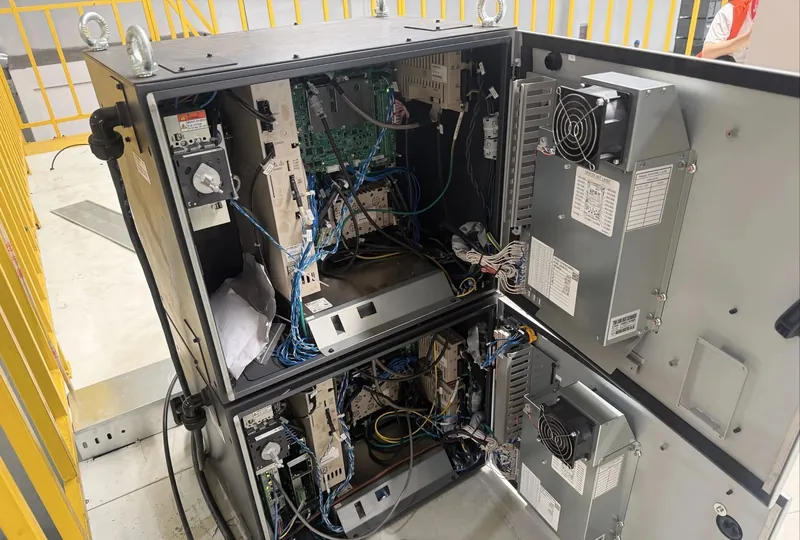
Filter intervals follow shop dust class: six to twelve months in normal assembly shops, three to six in grinding, welding or dusty shops, and replace on sight when light transmission clearly drops. Fans get three checks: noise or wobble while turning, speed against a same-model new unit (hand tachometer or trained ear), and running current - a rising current is the classic worn-bearing signal. Any fail means replace; we do not "watch it".
Cleaning without a re-check is not cleaning. Our standard: 30 minutes under load, log power-module and cabinet inlet temperature, compare with the pre-service record - it should drop clearly. Insufficient drop means a duct still blocked or a fan short of airflow; keep chasing. The temperatures go into the service file as the baseline for next time.
Aged door seals let shop dust bypass the filter entirely. We check seal compression and damage on every service and replace when aged. It costs almost nothing and decides whether the filter interval means anything in practice.