The reducer is the most expensive and least forgiving part of a robot body. Wrong interval, wrong grease, over-filling or a blocked drain all shorten its life directly. This page writes out our full field procedure.
Manuals quote intervals for standard duty; the field has to correct for load and takt. Our correction: continuous high takt (duty cycle above 60% for long stretches) cuts the interval to roughly sixty percent of the manual figure; frequent start-stop with high inertia takes another twenty percent off; a shop floor above 40 C ambient takes another twenty percent. Stacked together, a manual interval of ten thousand hours can become six thousand in service.
Two field signals also call a change early: grease samples that turn black with a metallic sheen, and reducer surface temperature running 10 C above the normal figure for the same model under load. Either one means change now, interval or not.
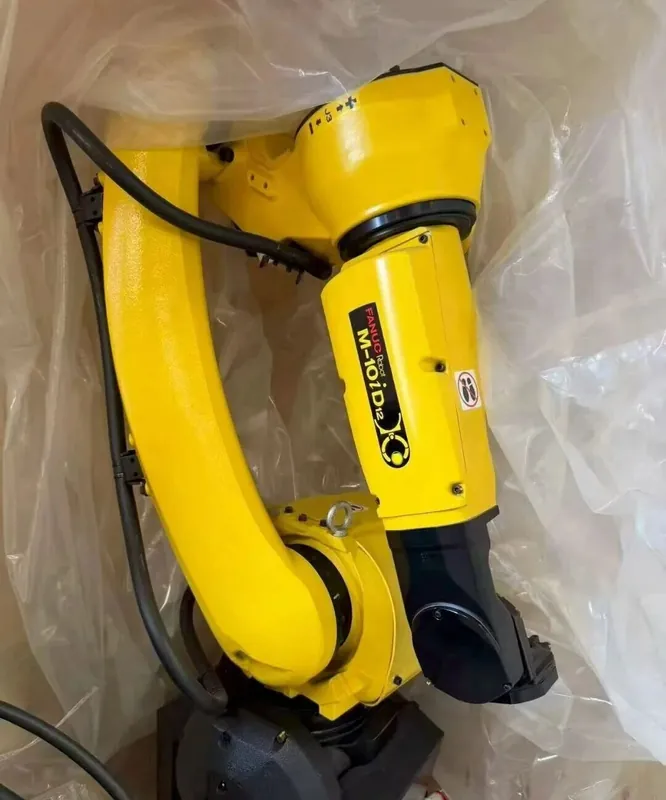
RV and harmonic reducers differ in viscosity and EP-additive requirements, and mixing grades leaves the oil film too weak. On FANUC arms the reducer grease is commonly a manual-specified grade in the Kyodo Yushi Vigogrease RE0 family; every other brand follows its own maintenance manual. Our rule: check the manual grade before starting, log the batch, and never settle for "close enough". If the new grade differs from the old, drain fully, flush once with the new grease, then fill.
Wrong order pressurises the housing. Our fixed order: robot to zero, power off, lock and tag - open the drain plug first - inject slowly at the manual volume from the fill port - keep going until the drain runs clean new-grease colour, then finish the manual volume - let residual pressure bleed - refit both plugs at torque and mark them against loosening. Injecting too fast whips air in; the classic symptom is noise during the first runs after service.
First, noise: ten cycles at low speed unloaded, listening for once-per-revolution knocking or any new high-pitched tone. Second, temperature: half an hour under load, then compare surface temperature with the pre-service record - it should drop. Only when both pass do we sign the service record, which always carries four entries: grease grade and batch, fill volume, drain condition, and the check results.