The battery is the cheapest and most disruptive part on a robot: skip a pack worth a few dozen yuan and pay for a stopped-line mastering. This page covers part numbers, thresholds and the swap sequence.
| Brand / model | Common battery part | Nominal voltage |
|---|---|---|
| FANUC alpha-i series (R-30iA/B cabinets) | A98L-0031-0012 (battery pack) | 6 V (4x1.5 V lithium/alkaline pack) |
| Other brands | Per brand maintenance manual | Per manual |
Verify against the model manual: within one brand, different cabinet generations can differ in connector and voltage, so order by cabinet type, not by brand family.
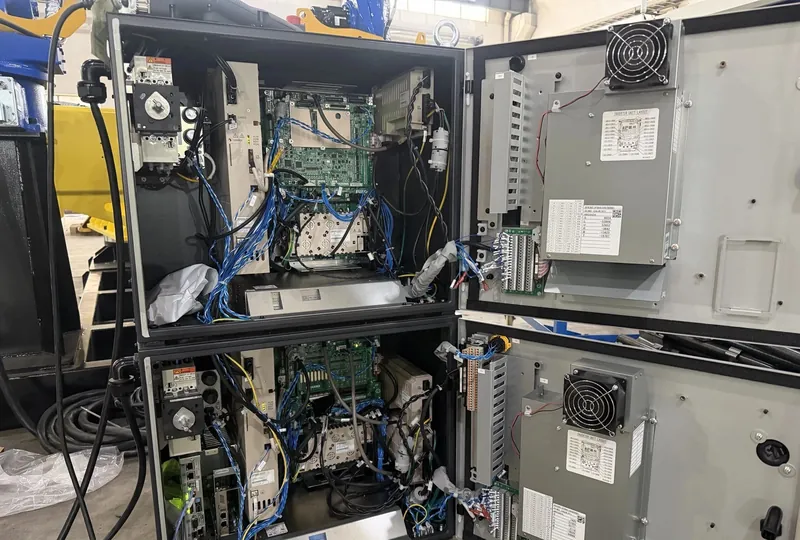
Our field line: measured voltage below 85% of nominal goes onto the next service's change list - we do not wait for the alarm. When the alarm does appear (FANUC SRVO-062/075 class battery alarms), the pack is usually at or past the memory-hold floor, so the swap must be planned with "may need re-mastering" in mind.
Confirm control power on - record each axis position value - verify new pack polarity and part number - swap (two people: one swaps, one checks polarity) - re-check voltage - compare axis values for jumps - log batch and date. If the manual requires a powered-off swap or the design has no hold-up, follow the manual and book a mastering window.
Run a zero-data consistency check: compare axis position values against the pre-swap record; no jump means pass. A jump means follow the zero-loss flow (see our mastering work standard page). The check result goes into the service record.