Drives and power modules are the priciest line on a spares invoice and the easiest to swap by mistake. This page writes our test order and the repair-versus-replace line.
Step one clears externals: filters, fans, supply, connectors (zero cost, high hit rate). Step two cross-reads: log the controller alarm code and the amplifier panel status code together - the panel code is usually finer (overcurrent / overvoltage / overtemperature / feedback each point their own way). Only step three brings out instruments: insulation, resistance, waveforms.
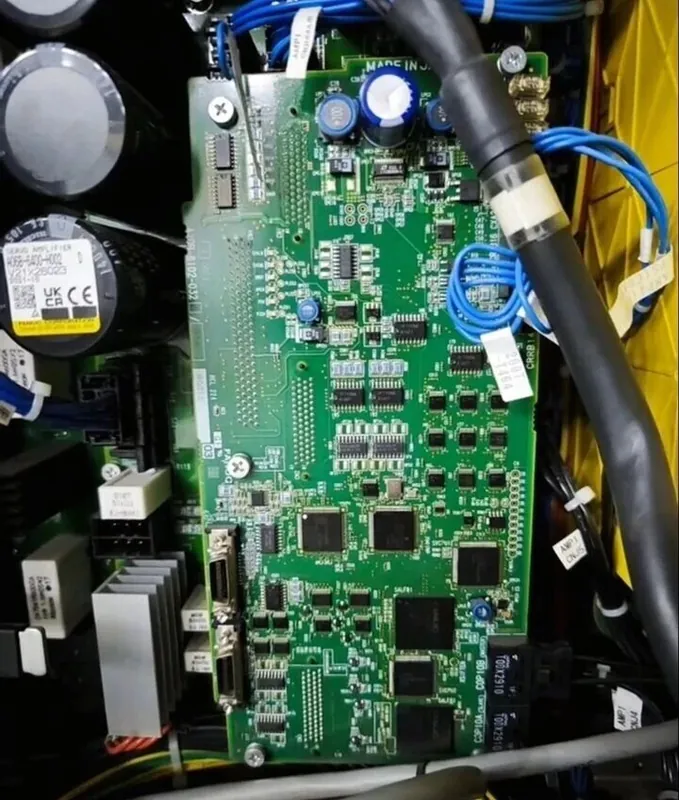
The decision rests on two facts only: is the fault a clear single point (one power module, one capacitor bank, one burnt spot in the drive circuit), and how much stop can the customer absorb? Single point and some patience: board-level repair (module/capacitor swap, reflow, drive-circuit fix) at much lower cost, returned only after a loaded test. Fault inside a multilayer board or the line is waiting: replace the unit. We do not force-repair boards that cannot be repaired, and we do not replace repairable boards to sell parts.
Repaired units go on the test bench: no-load run - 30 minutes at rated load - short overload at 110% - temperature and waveform logged throughout. Any anomaly fails the unit back to the bench. The test record ships with the part and is open to the customer.
Match drive and module numbers to the brand manual and nameplate; cross-generation substitution only against the manual compatibility table with the basis recorded. Without a published substitution basis we do not substitute - original part or OEM channel only.