In the industrial robot business, Kawasaki Heavy Industries, FANUC and Yaskawa Electric are about as familiar with one another as rivals can be. For years their sales teams have marched into the same car plants and the same consumer-electronics factories to fight over the same orders — perfectly ordinary, everyday competition. Yet in July 2026 the three announced they would do something together, and what they joined forces to compete for was neither products nor components. It was data.
The project is about laying a foundation for embodied intelligence on the factory floor: 5,000 hours of operational data are to be collected from production lines in the first year, backed by Japan's METI framework and up to JPY 2 billion (about CNY 100 million) in funding from NEDO. The money is not spectacular, but the move is far from ordinary — it signals that the axis of competition in industrial robotics is shifting from the performance of the machine itself toward the scale and quality of data.
First, the facts:
- Kawasaki Heavy Industries, FANUC and Yaskawa Electric are teaming up to build datasets for embodied intelligence in manufacturing; the project has been selected for GENIAC, the generative AI development support program promoted by Japan's Ministry of Economy, Trade and Industry (METI) and NEDO;
- The three will develop the foundations of a "VTLA model" that processes vision, tactile sense, language and action in an integrated way, and collect 5,000 hours of video, tactile and motion data from the field in the first year;
- The project runs from August 2026 to July 2027, with up to JPY 2 billion in NEDO funding; Osaka University, tactile-sensor startup FingerVision and AI infrastructure company ABEJA are also taking part;
- What the three are standardizing is only "data specifications and collection methods"; each company keeps its own field data, control technology and hardware.
Rivals Seated at One Table
As planned, the project runs for one year, from August 2026 to July 2027. "Embodied intelligence" has been no fresh term in the industry these past two years: it refers to AI that acts in the physical world — not generating text and pictures on a screen, but driving a robot's arms and hands to grasp, assemble and carry, and actually finish the job. It may sound like nothing more than a different output target; in reality it is an entirely different technical route.
The division of roles within the project is clear-cut. The three robot makers are responsible for standardizing the data specifications and the collection platform; Osaka University serves as the project principal; ABEJA, commissioned by the university, handles advancement of the base technologies; and the tactile sensing part is entrusted to the startup FingerVision. Competitors, a university and startups sitting down at one table for the same set of data — the makeup of that table alone tells you how much weight this carries.
The Decisive Factor Has Moved from the Machine to the Data
For the longest time, competition in industrial robots meant competition in hardware. Positioning accuracy, payload, speed, durability — one spec sheet could pretty much settle the pecking order. That mechanical craft is exactly what Japanese makers built up over decades, and it has kept them in the front row of the world's industrial robot industry.
Embodied intelligence tests a different kind of capability. A person simply says "bring that over here," and the robot has to judge the situation and get it done by itself — even if it has never seen that part before. General-purpose motions like that cannot be delivered by precision hardware alone; they take an AI fed on enormous amounts of operational data. The empirical rule from large language models holds here too: the scale and diversity of the training data largely determine the model's ceiling.
The trouble is that, until now, this data has been fragmented across companies. Recording formats, what to measure, how to measure it — every company did things its own way, and data collected by company A could not be fed straight into company B's model. Once the formats are unified, data from different companies and different processes becomes usable by one another; the data pool available to feed models suddenly expands, and development speed rises with it. Standardization is the foundation that makes this mutual use possible in the first place.
To put it even more plainly: no single company can collect field data diverse enough on its own. You have only so many industries and so many types of processes in hand; pooling rivals' data under one common format is far faster than everyone sitting on their own. The reason these rivals are joining hands at this moment is, at bottom, that the thing being fought over has changed.
What VTLA Wants to Do: Swap "Teaching" for "Learning"
At the heart of the development is a model called VTLA — Vision, Tactile, Language, Action — processing sight, touch, language and motion as one. The scenario it aims to deliver: understand a person's spoken instruction, see the object clearly through its cameras, then complete the motion while adjusting force based on the touch at its fingertips — the whole workflow handled end to end by a single model.
What stands out most here is the tactile sense. Conventional industrial robots operate mainly on vision and position information, but for delicate handwork — gripping a soft part, inserting a pin into a slightly offset hole — sensing slip and modulating pressing force are unavoidable. FingerVision's technology is there to fill exactly this gap.
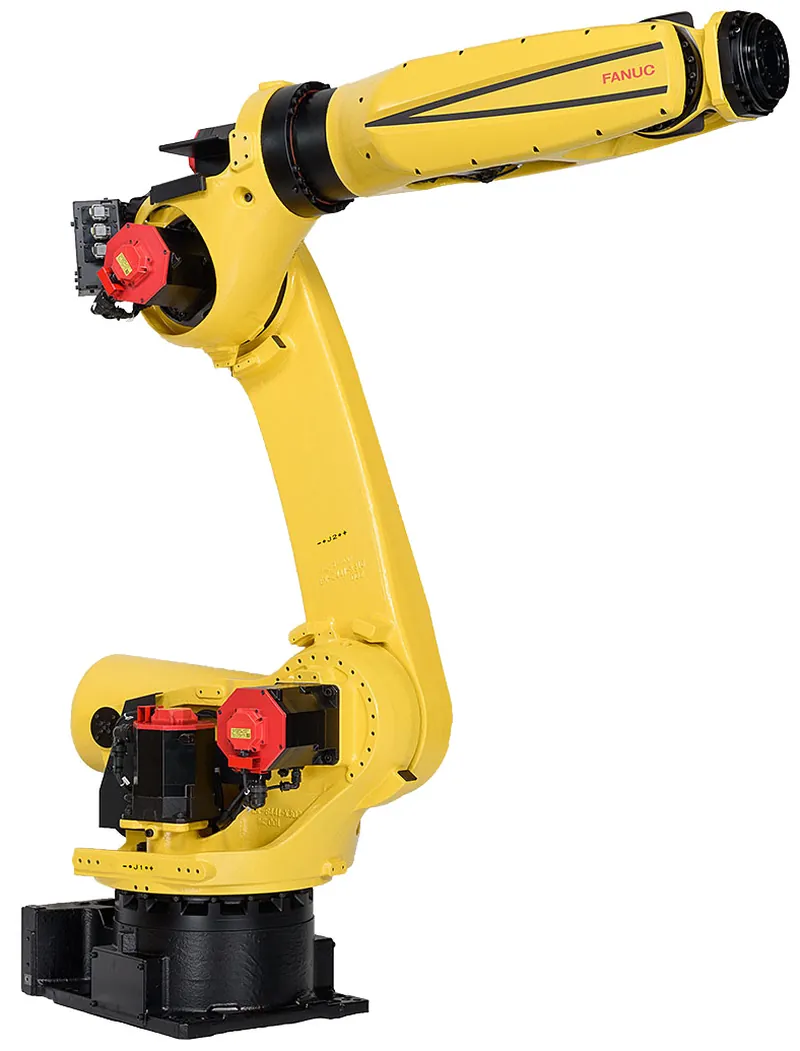
Even more thought-provoking is what it could replace: teaching. Today's floors depend heavily on "teaching" — walking the robot through each motion by hand, and re-entering coordinates and steps every time the workpiece changes. That step is a wall high-mix, low-volume plants cannot bypass on the road to automation, and the most people-hungry link on short-handed lines. If VTLA becomes practical, the way robots learn work changes from "taught by humans" to "learned by the AI from data," and they will manage a first-time task reasonably well. The premise of automation may flip from "teaching" to "learning" right here.
Shared Specifications, Contested Voice
The essence of the three-way alliance is hidden in the boundary line between what is shared and what is not. Only the data specifications and collection methods — the rules for how to record and how to store — are being standardized. What remains in each company's hands is its own field data from its own plants, its robot control technology and hardware, and, at the end of the day, its own products and services. The ground rules are pooled; the contest unfolds on top of them.
Which leads to the real point of contention: the right to be heard. Who owns the data collected in the common format, who gets to use it for training, who has the final say on the fine print of the standard — whoever grips these takes the early lead at the foundation layer of embodied intelligence. Setting a standard has always been, at the same time, a fight over who decides the details.
Widen the lens, and this move connects to the global scramble over data. NVIDIA is expanding its foothold in embodied intelligence through computing platforms and simulation environments for R&D. Separately, the three Japanese makers are also in business talks with Fujitsu and NVIDIA about real-world deployment, and will lean on overseas technology for the computing side and other links. But when it comes to "data standards for the field," they intend to keep a home-grown Japanese data base in their own hands — part of the platform can be borrowed, but leadership over the data will not be handed over. This alliance should be read in exactly that sense.
Integrators and Component Makers Will Have to Move
Once common datasets and foundation models take shape, the impact will spill over the robot makers' borders.
The most visible shift will be among system integrators. Installing robots on site and teaching them to run has always been the integrator's bread and butter. As "learning" gradually displaces "teaching," task-by-task manual teach-in work will shrink, and the weight will shift toward data-centered services — helping plants collect data that fits their floor, and tuning models to a specific process. From the people who install machines to the people who accompany data: this rewriting of the role may not be slow in coming.
For component and sensor makers it is opportunity. With VTLA raising touch to such a high seat, demand for force sensors, tactile sensors and the precision mechanical parts behind them could be lifted — landing squarely on the strengths of Japanese component makers. But the point where value lands may shift too: from "selling a sensor" to "how the data this sensor collects plugs into the platform."
One more thing worth noting for peers in China: whether this data standard will extend outward along Asia's manufacturing supply chains is a variable well worth watching continuously over the next year or two.
What to Watch Next: Three Question Marks
Data usage rights. Who owns the data after standardization, how far each company may use it, and how decision rights over the standard's content are split among the three — if these stay vague forever, the standardization slogan can be chanted on and on without ever growing into a true standard. The operating rules the project publishes going forward will be the first basis for judgment.
The volume of data. Whether 5,000 hours in the first year is enough to train a general-purpose model is hard to assess from the outside. Measured against the volume of text large language models swallow, 5,000 hours looks more like a starting point; that said, an hour of field-operation data carries a very high information density, so raw hours are not a fair yardstick. What will truly determine the model's caliber is how much more can be added from the second year on.
Whether the Japanese standard can go global. Can Japanese makers, who have ruled the world through hardware, hold the initiative on the new battlefield of "data"? This one-year project is the earliest touchstone.
For a service provider like us, dealing with these three companies' equipment every day, there is one more layer of practical meaning: the "accent" of the machines on the line may change. For the past twenty years, the core craft of repair and commissioning engineers has been teaching, parameters and troubleshooting; going forward, engineers who understand field data and know how to "feed" the AI will only see their value rise. The machines are still the same machines; the way the game is played is switching tracks. Related services: imported-brand repair and maintenance, brand coverage and model resources.
Further Reading
- FANUC Alarm Code Quick Reference
- Used Robot Sales
- Domestic-Brand Installed Base and the Service Ecosystem