
More and more factories are buying used robots these days — they cost only 30–50% of a new machine and arrive faster. But the pitfalls are real too: machines with tampered running hours, robots assembled from mixed parts, sellers who vanish after a failure. We've seen them all. The process below is the one we use when we take in machines ourselves — eight steps, and following them avoids most of the traps.
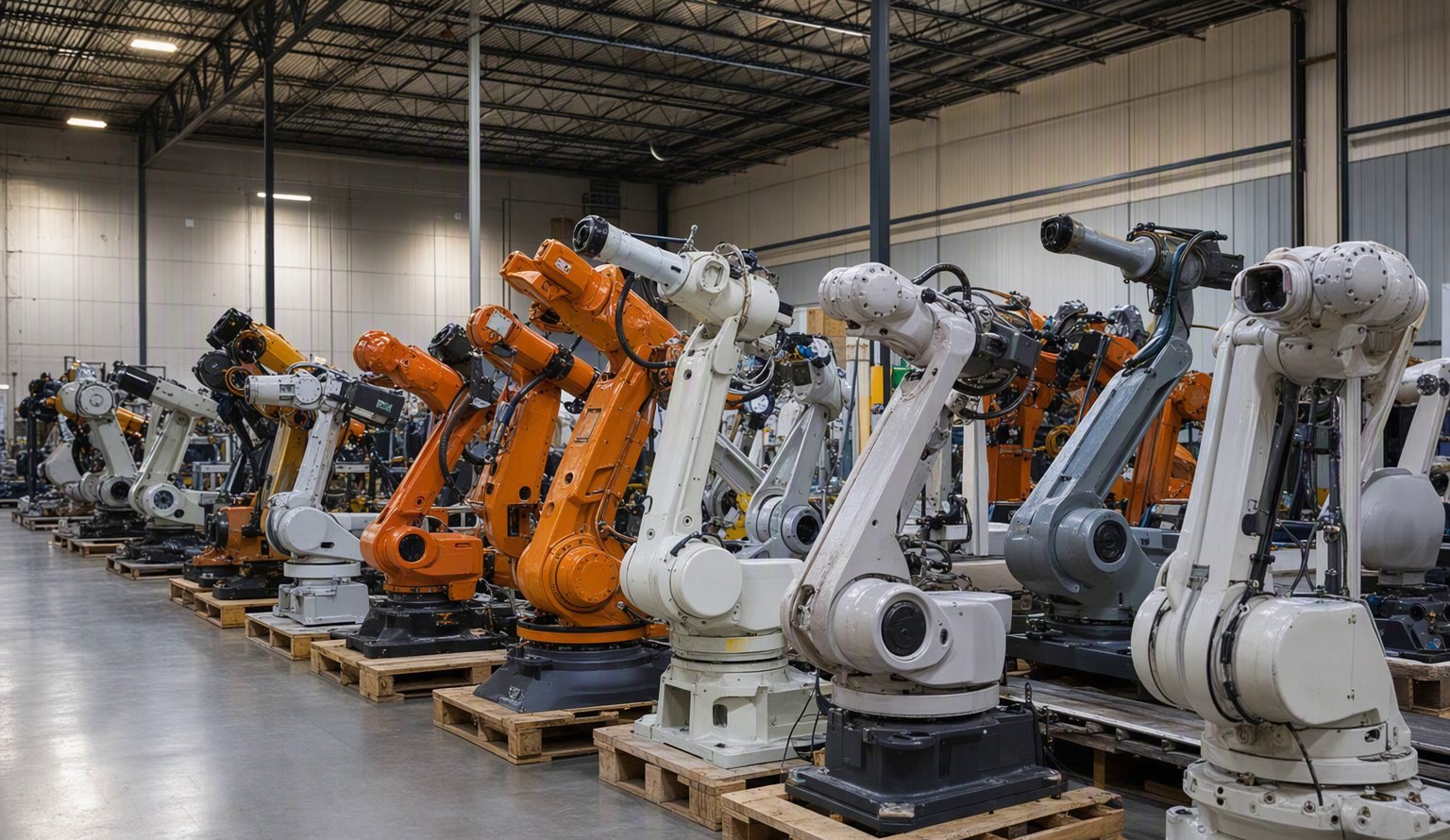
Step 1: write down your requirements first
Payload, reach, application, cycle time. Write them down, then look for a model — don't fall in love with a cheap machine and bend the requirements to fit it. Keep about 20% payload margin: if you regularly handle 8 kg parts, look at the 10 kg class.
Step 2: verify the origin and running hours
Ask which factory it came from, how long it ran, and what it did. Demand a screenshot of the running hours from the controller — never take a verbal figure. FANUC, ABB and YASKAWA controllers all show cumulative operating hours. Machines whose clocks have been rewound are usually priced "conveniently" low; that is exactly when you should ask more questions.
Step 3: check service and incident history
Any major accidents? Which core parts were replaced? If a reducer was swapped, ask what grade it was; if the robot was ever crashed, focus on repeatability. Machines from proper channels have traceable records — treat anything without records as potentially compromised.
Step 4: run a live test, at least half an hour
Don't judge a robot standing still. Ask to power it up: run the full travel at no load, listen to every joint for abnormal noise or hesitation, then run a representative trajectory under load and watch repeatability. After half an hour of running, touch each joint housing — overheating points to bearings or reducers.
Step 5: verify the actual configuration
Controller model, teach pendant, cables — are they the original matching set? Has the backup battery been replaced? An old battery can mean lost program backups. On the used market, mismatched bodies and controllers are common, and they complicate future repairs.
Step 6: put three things in the contract
One: the machine's actual condition — running hours and service history — written into the contract. Two: warranty scope and duration, even if only three months. Three: an acceptance window after delivery, with return rights if it fails inspection. A contract without these three clauses puts all the risk on you.
Step 7: hold back final payment until acceptance
Keep 10–20% as final payment until the machine arrives, is installed and runs your process. A seller who insists on 100% up front and refuses any retention is a risk signal in itself.
Step 8: collect the handover documents
Program backups, parameter lists, wiring photos — check them item by item at handover. These documents will be worth a lot the first time you need repairs.
Field Notes
In the purchasing process we recommend writing the powered test run into the contract's acceptance clauses rather than leaving it verbal: the seller powers the machine on site, runs ten idle cycles and performs one repeatability spot-check — the final payment follows only when all three pass. This step intercepts the vast majority of "only-discovered-on-arrival" problems (dead teach-pendant keys, an axis with a growl, positioning drift). A seller who refuses a powered acceptance is itself the strongest risk signal.
Quick Reference
| Item | Field standard |
|---|---|
| What to check first | The three powered-acceptance items |
| When to walk away | Any item fails |
| Must accompany delivery | The acceptance clause text |
Need someone to inspect with you?
We offer used equipment appraisal and buy-back, and we regularly help clients gate the machines they bring in. Send us the model and photos of the machine you're considering — our engineers give a free remote first opinion, and we can arrange on-site inspection support across the Pearl River Delta. Browse machines already in stock in our photo gallery.