
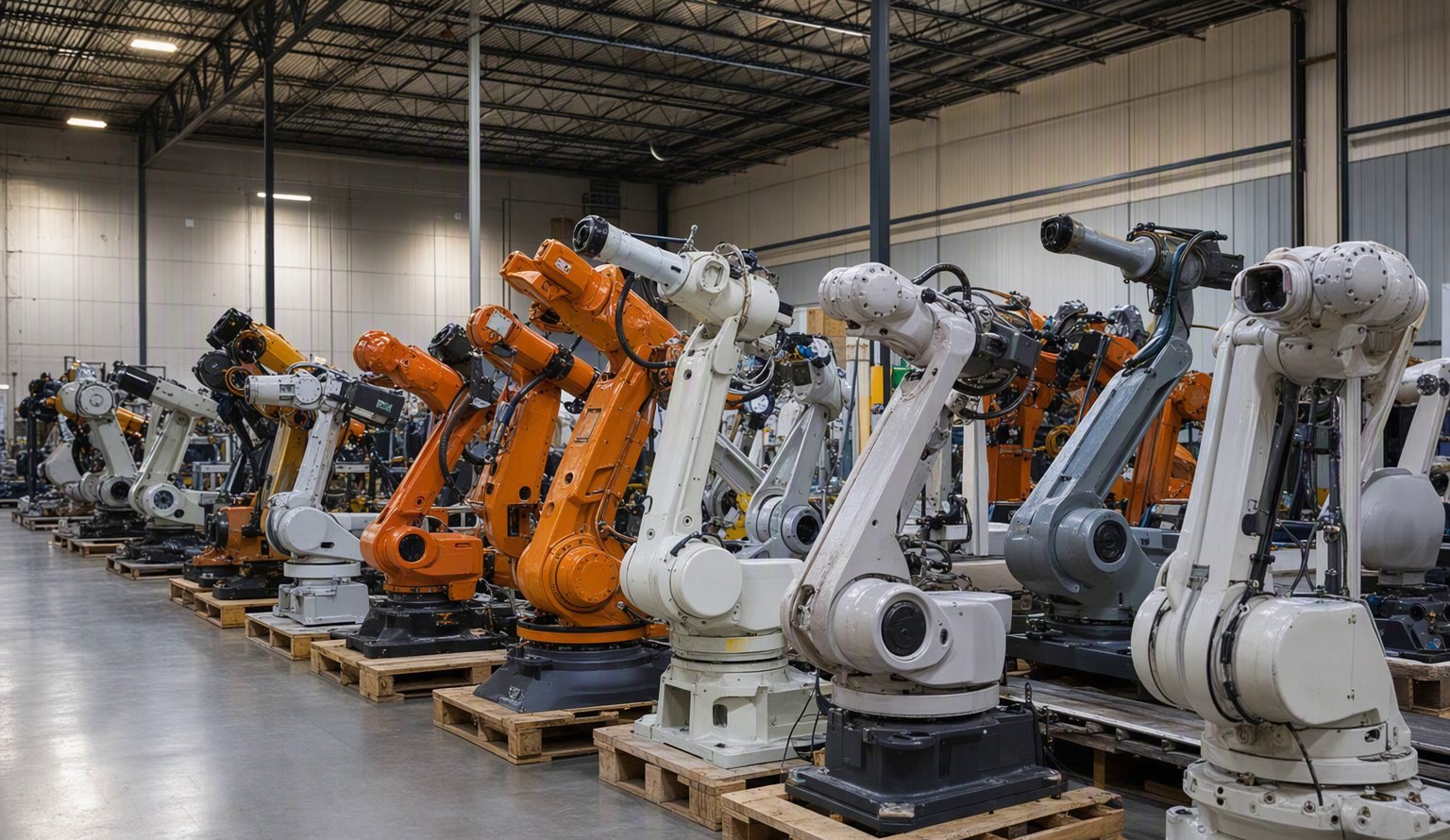
A used robot typically costs only 30–50% of the new price — a highly cost-effective way for small and medium-sized manufacturers to automate. But in the used market every unit is different, and quality varies widely: without knowing how to inspect one, it's easy to fall into a trap. As a team that grew out of repair work, we're sharing the seven most critical inspection checkpoints — once you've learned them, whoever you buy from, you'll know what you're getting.
1. Verify the Serial Number and Confirm a Clear Origin
Check that the serial number on the robot's nameplate matches the control cabinet and teach pendant as a matched set, and ask about the equipment's origin and years of service. A clear origin and undisputed ownership are the baseline — no matter how cheap, never touch a machine with unknown provenance.
2. Assess the External Condition — Focus on the Details
Dents and paint scuffs on the housing are normal signs of use; don't be too fussy about those. Focus instead on: whether the robot body is seeping oil (especially at the axis joints — it can indicate aging reducer seals), whether there are weld spatter burns, and whether the base has ever cracked and been repaired.
3. Jog Each Axis Manually at Low Speed
With the power on, use the teach pendant to move each axis one by one at manual low speed, feeling for abnormal noise, stiffness or vibration. Run all six axes (or four) through their full range to the limit positions — listen to the sound and watch the smoothness.
4. Check Accuracy and Repeatability
Have the robot return repeatedly to the same taught point and observe the consistency of the actual arrival position; if possible, measure repeatability with a dial indicator. A robot whose accuracy drifts noticeably either has a problem with its master/zero-point data or has serious mechanical wear.
5. Inspect the Servo System and Control Cabinet Condition
Check whether the inside of the control cabinet is clean, whether there are signs of water ingress or corrosion, and whether the fans run normally. Read the operating hours from the system (every brand records cumulative runtime) and the alarm history to learn what this machine "has been through".
6. Check the Cables and Teach Pendant
Look for damaged or aged body cables and loose connectors; check that the teach pendant screen, keys and emergency stop all work properly. Cables and teach pendants are wear items — if their condition is poor, you'll be spending money on them again soon after purchase.
Field Notes
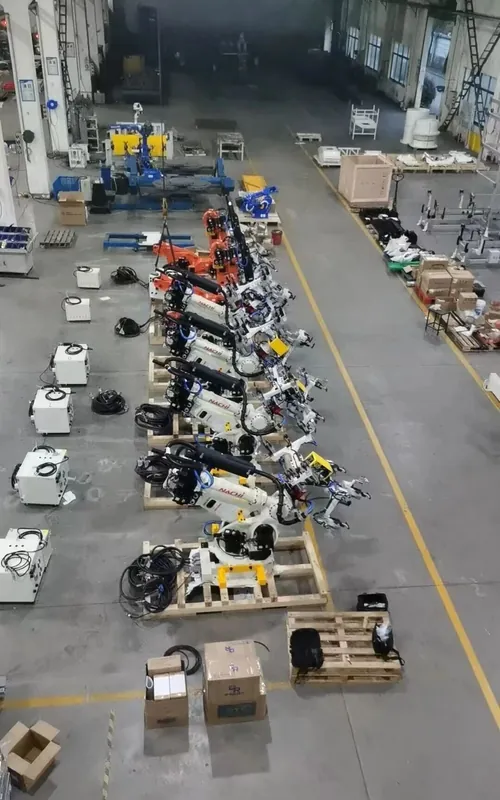
One step that often gets skipped during inspection: ask the seller for the machine's maintenance records and an export of its alarm history. On a well-documented machine, grease-change dates for the reducers, battery changes and the historical alarm distribution all line up, which gives the residual-value judgement something to stand on. Missing records do not make a machine unbuyable — but "teardown labour" and "hidden-wear risk" must be folded into the price negotiation. We list this as a mandatory check when we buy machines in, and we provide it proactively when we sell — fewer disputes on both sides.
Pre-Work Checklist
- Request the service history and alarm export
- Agree the powered-acceptance clauses in the contract
- Check the nameplate against the asset ledger
7. Run a Loaded Test That Simulates Real Working Conditions
The most important step: run the robot for a period of time under the payload and cycle rate of your actual process, observing temperature rise, accuracy retention and stability. A robot that idles without problems is not necessarily problem-free under load.
Buying a used robot is essentially exchanging inspection expertise for value for money. Master these seven checkpoints — or hand them to someone who knows the technology — and a used robot can be bought with confidence and used with peace of mind.