
A robot crash is one of the most heart-racing moments on a factory floor: a dull thud, the line stops, everyone gathers around. Here's the bottom line — What you do in the first half hour after a crash largely decides the repair bill. Handle it right and it may only need calibration; handle it wrong and a minor bump becomes a major overhaul.
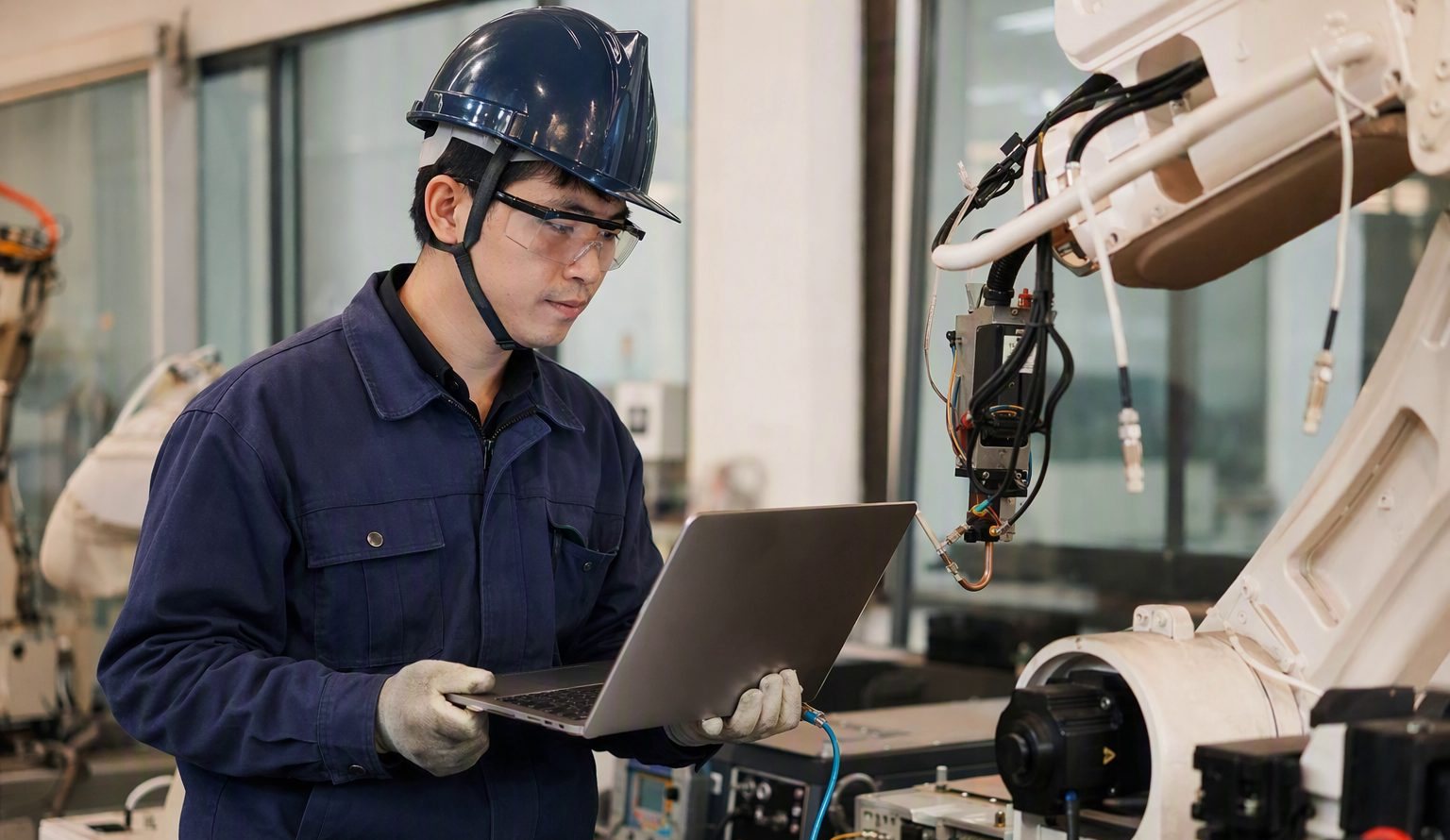
Step 1: cut power immediately and preserve the scene
Once everyone is safe, hit the emergency stop and drop servo enable right away. Do not try to "push it back" or force it to run again — after an impact, joints may already be mechanically damaged or binding, and forcing motion can spread deformation and cracks. Keep the robot in its post-crash posture so the engineer can see the original state.
Step 2: photograph, record, keep evidence
Take four things with your phone: close-ups of the impact point, a wide shot of the robot's current posture, the alarm codes on the teach pendant (write them down in full), and the damage to tooling and workpieces. If the equipment is insured, this is the backbone of the claim; even without insurance, alarm codes and scene photos let a remote engineer judge accurately.
Step 3: make a first damage assessment
| Symptom | Possible damage | Recommended action |
|---|---|---|
| No visible deformation; moves fine at low speed | Accuracy drift; needs calibration | Schedule calibration |
| Abnormal noise or hesitation in one joint | Reducer or bearing damage | Stop and inspect |
| Visible bending, cracks or missing parts | Structural damage | Do not power up; report for repair |
| Torn cables or loose connectors | Cable and electrical damage | Do not rewire yourself; report for repair |
On-site first assessment only; the final word comes from professional inspection.
Step 4: decide — repair or calibrate
If a low-speed probe (only when there is no visible damage) shows the robot basically works, a mastering recalibration and trajectory check usually gets it back into production; if there is noise, hesitation or visible damage, stop powering it on and call for repair. The rule is simple: moves but inaccurate — calibrate first; won't move or sounds wrong — must be inspected.
Field Notes
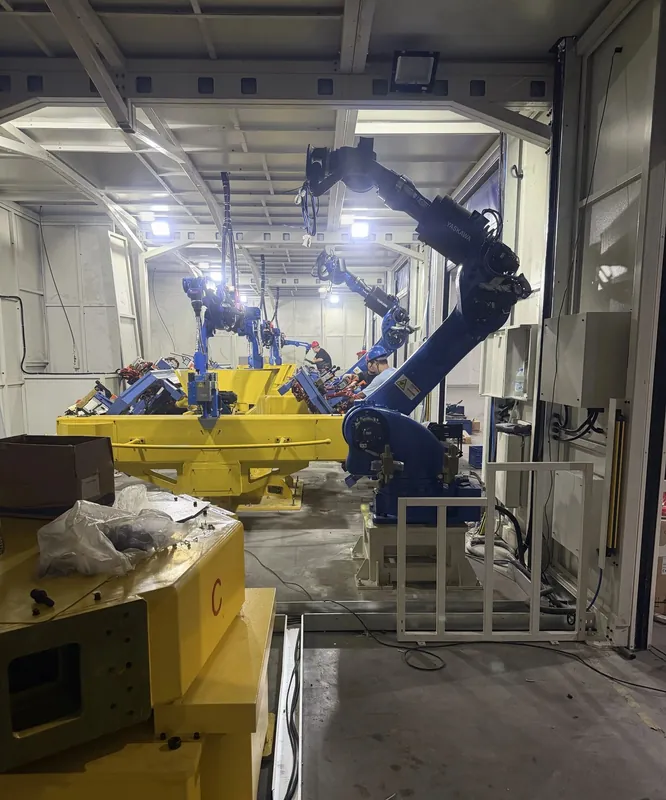
One easily missed item in the post-collision checklist: re-verify the tool coordinate frame (TCP) data. The impact at the moment of collision can slightly deform the tool flange or loosen its bolts, leaving the actual TCP a few millimetres off the values stored in the controller — an offset that raises no alarm yet systematically shifts every subsequent taught point. Our practice: after handling a collision we always re-run the four-point TCP check; if the deviation is out of tolerance we recalibrate and re-check the flange fastening.
Unsure on site? Send the photos first
Send us the alarm codes and scene photos — our engineers give a free preliminary assessment remotely. When an on-site visit is needed, we arrive within 30 minutes to 3 hours across the Pearl River Delta, inspecting before quoting. Entry point: on-site fault diagnosis.