
"Is renting a robot worth it?" — easily one of the most common questions we get. The honest answer is never a flat yes or no; it depends on how you use the machine, for how long, and how tight your cash is. This article skips the slogans and runs the numbers on three real scenarios, spreading out the full cost of renting, buying new and buying used. Figures reflect 2026 Pearl River Delta market rates — plug your own application into the same framework and the answer writes itself.
Field Notes
One variable the rent-versus-buy ledger often omits: who keeps the residual value. A purchased machine still has recoverable value at the end of year three (well-kept, fully documented used machines trade just fine), while a lease hands that residual to the lessor. So "renting is more expensive" only holds over short horizons; once residual value is folded into the total cost, usage needs beyond about eighteen months mostly favour buying outright — unless cash flow or project certainty says otherwise.
Further Reading
- Repair craft knowledge base: procedure and judgement thresholds
- Spares & consumables: interval tables and part-number checks
- Alarm topic library: related codes in one place
Count the full cost: what owning a robot really costs
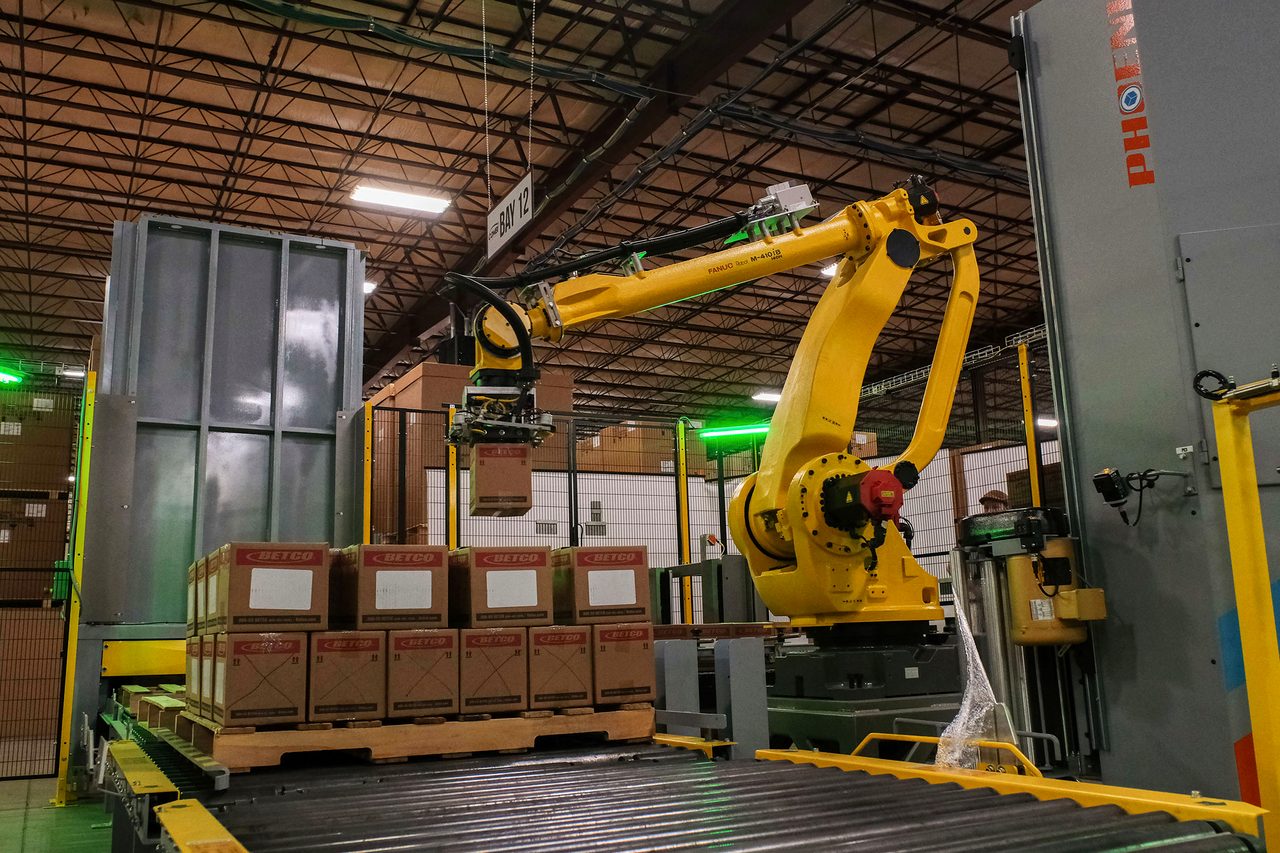
Most buyers cost the invoice price and nothing else — that is where the math goes wrong. Take a small six-axis robot (FANUC LR Mate 200iD or ABB IRB 1200 class). The complete cost sheet for buying looks like this:
- Equipment: RMB 120,000–180,000 new; RMB 40,000–80,000 refurbished used
- Installation, commissioning, programming: RMB 5,000–20,000 depending on process complexity
- End-of-arm tooling: RMB 3,000–20,000 — the line item most budgets forget
- Safety fencing & integration: RMB 10,000–30,000, mandated by safety regulation, unavoidable
- Annual servicing: roughly RMB 3,000–8,000/year — gearbox grease, batteries, filters are hard costs
- Repair risk: one out-of-warranty servo motor or gearbox repair runs RMB 5,000–30,000; downtime losses are extra
- Cost of capital: RMB 150,000 tied up for three years at 6% annually is RMB 27,000 of opportunity cost
Add it up and The true three-year cost of ownership for a "RMB 150,000 robot" is typically RMB 200,000–240,000. Rental should be compared against that total — not against the invoice price.
Scenario 1: four months of peak season — rent, no contest
A hardware factory in Foshan sees orders double every September through December and needs one extra handling/palletizing station. The owner's first instinct was a used robot (budget RMB 60,000). We ran the alternative:
- Buy used: equipment 60k + installation/programming 12k + tooling 8k + fencing 15k = RMB 95,000 upfront. The robot then sits idle eight months a year; residual value after three years is about 30k — three-year net cost around 65k, before servicing and repairs
- Rent short-term, 4 months: 6,500/month × 4 = 26k, freight and installation 3k, refundable deposit 20k returned in full. Three peak seasons over three years ≈ RMB 87,000 — but Zero cost, zero idle assets and zero maintenance in every off-season
On the surface, three years of renting costs 20k more than buying. But in the buy scenario the machine gathers dust eight months a year — it takes floor space, still needs servicing, and its residual value keeps falling. Cash flow tells the sharper story: renting ties up 29k for four months a year; buying locks 95k up front. For seasonal orders, renting is the definitively correct answer.
Scenario 2: piloting a new process — rent is insurance
An electronics plant in Dongguan wanted an automated screw-driving station for a process they had never run: unknown cycle time, unknown yield, unknown operator acceptance. Buying new at RMB 140,000 meant eating a 40–50k loss on resale if the process failed.
Instead they rented a cobot for three months (RMB 7,500/month, basic programming included): RMB 26,000 total. Three months of data decided it — cycle time on target, 99.2% yield, 1.5 headcount saved per shift. They then converted to rent-to-own, with half the rent paid (13k) credited toward the purchase.
In the pilot phase, renting is really buying an exit option. If validation fails, you return the robot and lose 26k; if you bought and validation fails, you start losing from 100k. That insurance premium pays for itself.
Scenario 3: year-round full production — buy, though not necessarily new
If the process is settled, the cell runs two shifts year-round and you plan to keep it five years or more, buying does beat renting. Rough math: 36 months of long-term rent totals RMB 160,000–200,000, while a well-refurbished used robot (60k) plus integration (30k) plus three years of servicing and repairs (20k) comes to about 110k — and you still hold an asset worth around 30k.
Two conditions apply: The process really is settled — we see product changeovers and doubled cycle-time requirements within six months more often than you would think; and You can actually carry the equipment through its life — who services it, who repairs it, who resells it at end of life. If either question has no answer, long-term rental with full service, or rent-to-own, remains the safer play.
A decision table you can apply directly
The three scenarios condensed into rules:
- Usage under 12 months, or only a few months a year → Short-term rental
- Process unproven, orders uncertain → Rent first, buy later (short-term conversion / rent-to-own)
- Year-round use but tight cash flow and no maintenance team → Long-term rental or rent-to-own
- Settled process, full-time production, in-house maintenance capability → Buy (new if budget allows, refurbished used if not)
- Fast-obsolescence industries (3C electronics) → Rent beats buy — avoid stranded assets
Traps in the rental market — check before signing
Since we are talking ledgers, a few traps that genuinely exist in this market:
- Vague deposit terms: no written definition of "damage," so deductions become discretionary at return. The proper way is a contract that itemizes normal wear versus operator-caused damage — ours lists the criteria clause by clause, and any deduction requires a signed written confirmation with photos first
- Repair buck-passing: "repairs covered" verbally, "operator-caused damage excluded" in the contract — and then every fault is operator-caused. Before signing, ask how faults are adjudicated: who inspects, against what standard, and how disputes are resolved
- Low rent, high extras: an attractive monthly figure, then freight, installation, commissioning and "management fees" billed separately until the total beats the market. Demand an itemized quote covering every line — and a contract that does not move after signing
- Robots of unknown provenance: no inspection record, no verifiable manufacture year or run hours — rent with caution. Every machine should ship with a checkable pre-delivery inspection report
The bottom line
Renting is not "the alternative for those who cannot afford to buy" — it is one of several ways to acquire equipment. It converts a lump-sum outlay into controlled monthly cost, shifts repair risk to the lessor, and caps the price of being wrong. For seasonal production, pilot runs and cash-flow-sensitive manufacturers it is often the mathematically optimal choice; for settled processes running full-time, buying remains perfectly rational. The point is not to pick a camp but to run your own numbers. Our rental plans overview carries the full model and rate reference, and the used robots for sale page covers the buy-out route — read them side by side and the right choice becomes obvious. Still unsure? Call us with your application and an engineer will run the ledger with you.