The sogo shosha — Japan's general trading houses — can be summed up in one line: wherever the next growth theme emerges, they have already planted seeds there in advance, from liquefied natural gas to lithium mines, without exception. In 2026, the seeding target is embodied intelligence. The interesting part: the trading houses do not build a single robot themselves, yet the big five are moving almost simultaneously, entering through all sorts of doors — bulk picking in logistics, food-processing floors, machine tools, all the way to ultra-precision components for humanoid robots.
First, what each of them is doing:
- Sumitomo Corporation and America's Dexterity have set up the joint venture Dexterity-SC Japan, which is already running proof-of-concept trials of AI truck-loading robots with Sagawa Express;
- Itochu, together with its subsidiary CTC and Japan's Mamezou, concluded a business partnership in July 2026, targeting fields like logistics and food processing where conventional robots "don't pay for themselves";
- Marubeni completed its acquisition of Switzerland's TOLUS Group in July 2026, entering through machine-tool sales to bet on demand for ultra-precision parts such as humanoid-robot joints, aiming for machine-tool-related sales above JPY 2 trillion (about CNY 100 billion) by 2030;
- Mitsubishi Corporation and Mitsui & Co. are using their respective sales networks to connect with on-site needs — first map the demand, then talk solutions;
- The market is still early: several trading houses admit that embodied intelligence is not yet baked into their earnings forecasts, and whether it can become an earnings base remains to be proven.
Why Now: One Inescapable Shortage and Two Optimistic Sets of Numbers
What is pushing the trading houses through the door is, first of all, Japan's chronic labor shortage. Itochu President Keita Ishii puts it plainly: as the working population shrinks, "there will always come situations where we have no choice but to send in robots."
Market expectations are heating up accordingly. According to the Indian research firm Servicorn Consulting, the global embodied-AI market could reach USD 82.79 billion (about CNY 600 billion) by 2035, more than 16 times its 2025 size. Even more eye-catching are humanoid robots: materials compiled by Japan's Ministry of Economy, Trade and Industry from private surveys indicate that the global market for multipurpose robots centered on humanoids will enter a period of rapid expansion around 2030, potentially reaching about JPY 60 trillion (about CNY 3 trillion) by 2040.
Numbers aside, the logic behind the trading houses' moves is actually plainer. Ryunosuke Shibata, senior analyst at Japan's SBI Securities, puts his finger on it: "Planting seeds before a growth theme takes shape is precisely the trading house's stock-in-trade, and embodied intelligence is one of those themes." For the sogo shosha, the value of positioning one step ahead is growing — as for when the seed sprouts, that is a matter for later.
Sumitomo Corporation: Taking On Truck Loading First, the Hard Nut of Logistics
Sumitomo's route began with CVC (corporate venture capital): while surveying advanced technologies in digital tech and AI, it discovered Dexterity of California in the United States, invested in 2020, and in 2024 the two established the joint venture Dexterity-SC Japan (in Chiyoda, Tokyo). JV President Shotaro Oyama spells out the intent: through data collection and model training, the aim is to turn the technology into "a capability of their own," and "this has the potential to become a pioneering example of commercializing embodied intelligence."
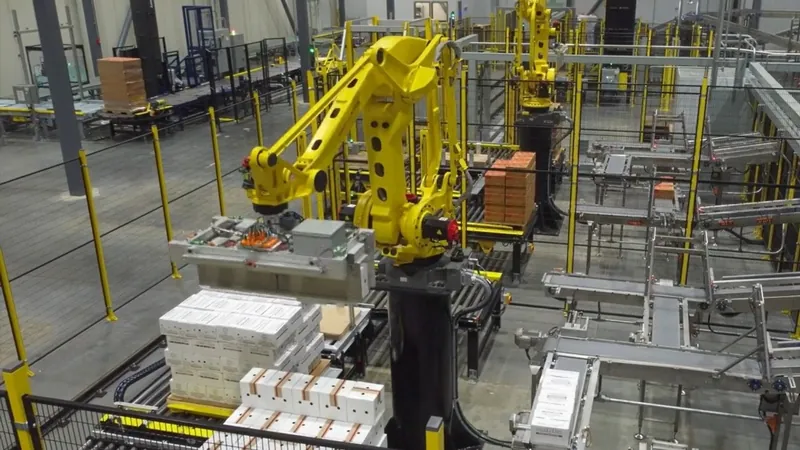
Dexterity's technology is already deployed at logistics companies overseas, with a decent reputation. It attacks a legendarily tough link in logistics: truck loading. Cargo comes in every size, shape and packaging, stacked irregularly, and what shows up on a given day is a matter of luck — conventional automation essentially surrenders in the face of such "uncertainty," while its robots cope nimbly in exactly this environment. The JV is currently running proof-of-concept trials of AI truck-loading robots with Sagawa Express (launched in December 2023), aiming to commercialize as soon as possible.
Itochu: Deliberately Picking the Sites Where Conventional Robots "Don't Pay Off"
Itochu's move was settled in July 2026: together with its IT subsidiary Itochu Techno-Solutions (CTC), it entered a business partnership with Japan's Mamezou (Shinjuku, Tokyo), whose business spans everything from robot bodies to control systems. Mamezou's parent is the Swedish investment fund EQT; Itochu and CTC, together with EQT, will propose solutions embedding embodied intelligence for logistics, food processing and other fields, then roll out the market through the customer bases of Itochu and CTC.
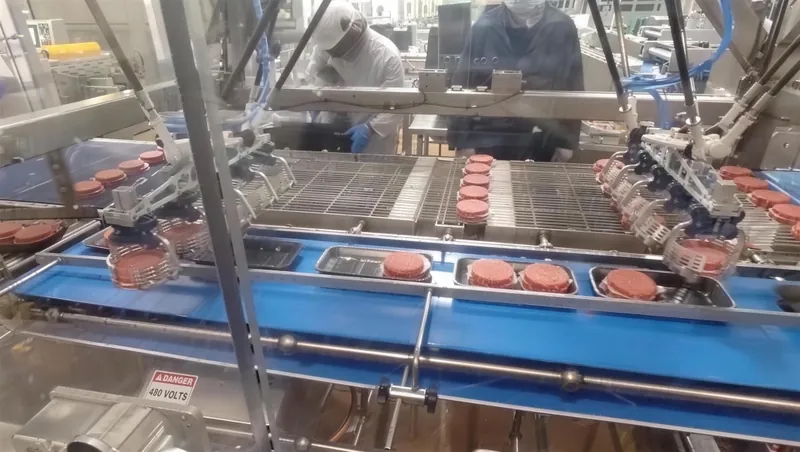
The target sites are picked with a sharp eye: precisely the places where conventional robots "fail the cost calculation." Food manufacturing is a textbook case. When Mamezou President Tetsuya Nakahara visited a regional ready-meal plant, a foreign national working on the line appealed to him directly: "The labor shortage is unbearable — please hurry up and bring in robots to rescue us." Nakahara says the hallmark of Mamezou's solution is "small robot arms that collaborate with people and can work right beside them" — they take up little space, a good fit for factories' increasingly fine-grained automation needs.
Mitsubishi and Mitsui: Use the Networks to Map Demand First, Then Talk Solutions
Mitsubishi Corporation and Mitsui & Co. are playing closer to the classic trading-house game: no rush to bet on any one technology — first use their networks to get a thorough read on what the field needs.
Mitsubishi Corporation Technos (Minato, Tokyo), a subsidiary of Mitsubishi Corporation, has joined hands with Persol Cross Technology of Japan (Shinjuku, Tokyo) to propose automation solutions to customers' labor shortages and other challenges. President Hideki Sagesaka leaves some room in his wording: "Embodied intelligence will become one of the means of solving customers' problems." At a trade show in July, the company exhibited the "automatic workpiece-following solution" from France's Involt as one example of embodied intelligence.
Mitsui & Co. Machine Techno (Minato, Tokyo), a subsidiary of Mitsui & Co., has meanwhile added exhibits showcasing the latest technology trends at its showroom in Tennozu, Tokyo. Makoto Yoshida, head of its Robotics and Automation Promotion Division, is equally measured: embodied intelligence "requires data accumulation, and the immediate priority is to get a firm grasp of customer needs." First understand this technology accurately, then deepen the dialogue with customers — that is its line of thinking.
Marubeni: Entering Through Machine Tools — the Humanoid Business Is "Right Now"
Marubeni's landing spot is the most unexpected of all: machine tools. In July 2026, Marubeni completed the acquisition of TOLUS Group, a Swiss machine-tool sales company operating in Switzerland and Austria. TOLUS holds exclusive local distribution rights for Japan's Okuma and other brands, and can also deliver turnkey solutions for automation needs; Marubeni already runs a machine-tool joint venture in the United States with Japan's Citizen Machinery, and the acquisition strengthens its ability to propose "machine tools plus automation and labor-saving equipment" as a package. By Marubeni's plan, machine-tool-related sales are to be lifted above JPY 2 trillion (about CNY 100 billion) by 2030.
What this chess move is really aiming at is component demand driven by embodied intelligence — with humanoid robots first in line. Yuta Takagawa, manager of the Machine Tool Section of Marubeni's Industrial Equipment Department, is frank: "I thought this was a business of the future, but listening to the suppliers, I learned it is right now." Robot joints and similar parts are inseparable from ultra-precision components, and demand for the machinery of Japanese makers that Marubeni handles is expected to grow substantially in step. One ring further out: cooling components for AI data centers and probes for semiconductor inspection equipment also demand high-precision, high-value-added machining, and Marubeni sees these as business opportunities too. On top of that, IT subsidiary Marubeni I-DIGIO Holdings envisions taking on infrastructure work such as network building, while logistics subsidiary Marubeni Logistics is pushing robot adoption in its warehouses, exploring automation powered by embodied intelligence — the whole line now runs from parts all the way to the warehouse.
From Sowing to Harvest: the Real Test Is Just Beginning
The moves are broad, but the capital markets stay cool. Ryunosuke Shibata points out that "trading houses use AI extensively in their investment decisions, but embodied intelligence is not yet reflected in their earnings forecasts." Translated: the seeds are all planted — when they flower, and how big the flowers will be, nobody dares to write into the accounts. For a service provider like us, moving between equipment and production lines, the trading houses' positioning is a useful reminder: embodied intelligence is still some distance from "collecting revenue," but it is getting ever closer to the "actual floor" — and logistics, food and machine tools happen to be exactly the three openings where small and mid-sized Chinese factories struggle most with automation. Related reading: application engineering support, Toyota's 400,000-robot plan.
Further Reading
- Toyota Steps In: Weaving a Data Net with 400,000 Robots
- Why Kawasaki, FANUC and Yaskawa Made a Rare Alliance
- New Robot Sales