On September 18, 2026, Toyota officially announced its entry into the robot business for production sites. The news itself was no surprise — the company has been in the robot game for years and has tried just about everything, from the basketball-shooting robot CUE to the life-support robot HSR. What is different this time: it set up a new organization called "Toyota Robotics" to sell robots carrying its in-house AI to the outside world, and it put out a mid-to-long-term number — about 400,000 units.
What does 400,000 units mean? Japan's entire annual shipments of industrial robots run somewhere around 50,000 to 60,000. So this is clearly not a conventional sales target. Put the number next to another piece of information and the picture becomes clear: of the 400,000 units, 150,000 would be used by the Toyota Group itself and 250,000 by suppliers, rolled out alongside equipment renewals of about JPY 1 trillion (about CNY 50 billion) per year starting in 2028, in step with major overhauls of roughly 60 plants worldwide. In other words, Toyota is planning itself and its entire supply chain as a net for collecting data from production sites.
First, the skeleton of the story:
- Toyota announced its entry into the production-site robot business on September 18, 2026, setting up a new organization, "Toyota Robotics," to sell robots equipped with its in-house AI;
- The mid-to-long-term target is about 400,000 units in use: 150,000 within the group plus 250,000 at suppliers, in step with equipment renewals of about JPY 1 trillion per year from 2028 across roughly 60 plants worldwide — the figure includes existing industrial robots and is not the sales volume of any single model;
- The core robot "ELEY" weighs about 50 kg, has two-finger hands and moves on wheels, and runs the behavioral foundation AI "Large Behavior Model" (LBM) developed by the Toyota Research Institute (TRI);
- Toyota plans to turn the work of its roughly 18,000 master craftspeople, the "takumi," into learning exemplars for robots, but the metrics for measuring success have not been announced.
ELEY: Wheels, Two-Finger Hands, and a Base That Gets Smarter the More You Feed It
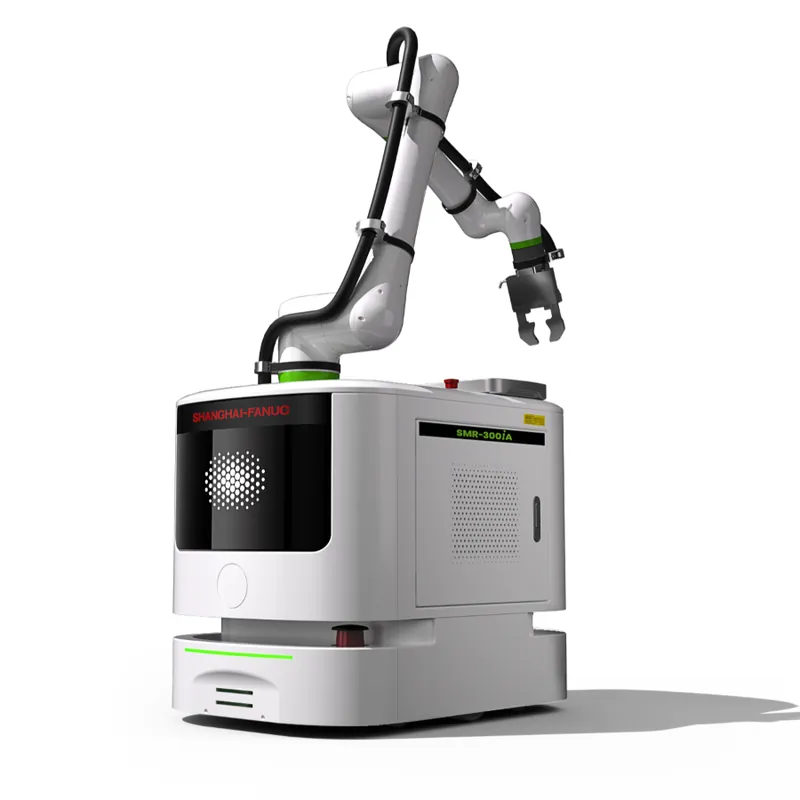
First, the body. ELEY weighs about 50 kg, has hands with two fingers apiece, and gets around on wheels — it does not try to walk on two legs like a human. The choice is not timid; it is highly pragmatic. Bipedal walking is hard to control, carries the risk of falls, and devours power, while factory floors are flat to begin with — wheels are cheaper, faster and far easier to roll out in batches. And rolling out in batches matters in its own right: the sooner robots reach production lines in fleets, the faster data accumulates. The form of the body is not the goal; it is the means that keeps data collection running.
The real protagonist is the AI inside. The LBM (Large Behavior Model) is a "foundation model for behavior": where large language models grow smart on massive amounts of text, the LBM learns robot motion from vast amounts of demonstration data. Unlike the old approach of programming every motion by hand, it learns by watching people work and acquires error-resistant motions from a small amount of learning. In public demonstrations, ELEY learned to fold T-shirts and can now repeat the task on its own. The strength of this kind of foundation model is that new tasks can be mastered with only a little additional learning; but the quality of the base depends on how much broad-coverage, high-quality field demonstration it is fed.
Which brings us to something Toyota holds that others can hardly copy: its roughly 18,000 "takumi" master craftspeople. The feel and the knack in a skilled technician's hands are precisely the highest-grade source of demonstration data. How a veteran dials in the force, how they deal with a defective piece — this tacit know-how that never gets written into process documents can go straight into the robot's learning material.
One more easily missed point: the LBM is not bound to particular hardware. In 2025, TRI showed a demonstration of its LBM driving Boston Dynamics' humanoid robot Atlas. Since the AI is not hostage to any single body, what decides the outcome is how many kinds of sites this AI can be run on, and how much data flows back. Every robot Toyota sells is also another node added to the net.
What Everyone Is Really Fighting for Is the Sites Where Data Gets Collected
Pull the camera back, and the same track is already crowded — and how each player is positioned says a lot.
Tesla is the most blunt about it. By mid-2026 it had deployed Optimus robots at thousand-unit scale at its Fremont plant and others, yet sales to outsiders were zero. Elon Musk himself has admitted that these robots are "mainly used for learning and data collection" and "have not yet become a real fighting force in the factories." Which is close to saying outright: what they want right now is data. Its collection sites, however, are mostly its own factories, so the diversity of settings is limited.
Germany's BMW and Mercedes-Benz are taking a different road: they do not build their own robots; they partner with specialized startups. At its Spartanburg plant in the United States, BMW put Figure AI's Figure 02 through a ten-month validation serving the production of more than 30,000 X3 vehicles, then moved on to a commercial contract for the successor model Figure 03 — about 40 units initially, billed at roughly USD 25 per robot per working hour. Mercedes-Benz brought Apptronik's Apollo into its Berlin hub, starting with intraplant logistics and initial quality inspection. There is a telling detail in this division of labor: the real data from the automakers' lines ends up accumulating on the AI companies' side. The ones holding the data are Figure and Apptronik — not BMW and Mercedes.
On volume and deployment speed, Chinese makers are running fastest. In September 2026, UBTECH opened a smart factory in Liuzhou, Guangxi with annual capacity of over 10,000 units — note that this is capacity, not deployments; but its Walker S2 does have several hundred units in service, inside plants run by BYD, Geely, FAW-Volkswagen, Dongfeng, FAW-Audi, BAIC and Foxconn, and Airbus in Europe has been pursuing related work since January 2026. Unitree Robotics had produced about 18,000 units cumulatively as of July 2026, with over 90 percent of components self-supplied, and plans to build capacity for 75,000 units a year. XPeng's humanoid robot IRON is aimed at mass production by the end of 2026. The Chinese government has set a target of over 100,000 units shipped per year by 2027. Global humanoid shipments exceeded 22,000 units in the first half of 2026, and the top five are said to be all Chinese companies. Getting large numbers of robots into diverse sites at maximum speed — that is how Chinese makers accumulate field data.
Toyota's Trump Cards, and a Clock That Started Late
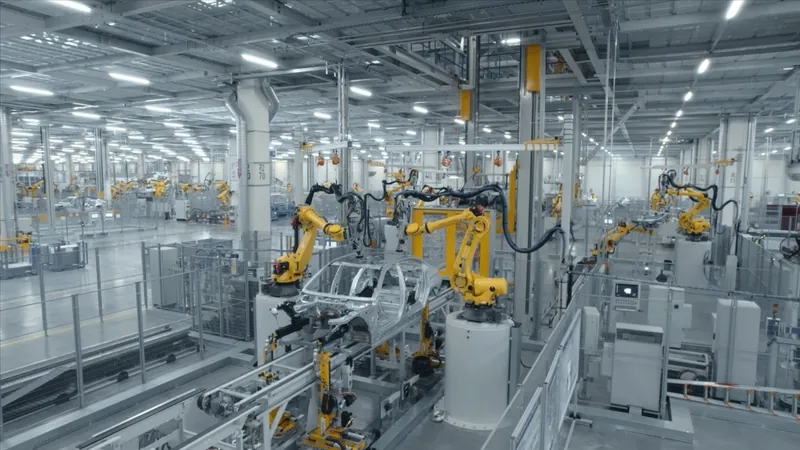
Tally up Toyota's hand from the data angle, and the assets are real. It owns one of the largest collections of production sites in the world, plus a supply-chain hinterland — with 250,000 of the planned units landing at suppliers, countless sites with different processes could become a vast and varied data source; the 18,000 takumi supply top-grade exemplars; and with AI, robots and plants all in its own hands, the data loop can spin entirely inside the company. On this point, Toyota and the European automakers that lean on outside specialists are playing two different games.
But the clock is a problem. The 400,000 units are a mid-to-long-term target; the real push comes after 2028. Tesla is already collecting data at thousand-unit scale today, and Chinese makers are already putting robots into the major car plants. Data accumulation compounds: the earlier the loop starts turning, the deeper the learning and the bigger the next round of performance gains — and conversely, once you fall behind, the gap tends to widen with time rather than hold still.
The second worry is data bias. If the sites are limited to Toyota itself and its supply-chain system, the data collected may lack the diversity needed to generalize to other companies' factories. Whether this sprawling supplier network truly becomes a data advantage will, in the end, depend on how far it opens up beyond the group.
To Judge the Odds, Watch These Three Things
The pace of deployment. When, how many units, into which genuinely running lines — ignore the stage demos; count the density of real machines going live. The breadth of data. How far it reaches across the company's own sites, the group's and outsiders' directly decides how general the model can be. The report card from the field. How much improvement the LBM actually delivers in yield and effective operating rate — Toyota has not published that metric yet, and sooner or later the exam comes due.
At bottom, the 400,000 figure itself is not what decides the outcome. What decides it is whether Toyota can put real machines onto production lines early and as widely as possible without waiting until 2028, so that the loop of high-quality data collection and learning starts turning first. For those of us who work on the equipment side, there is a closer-to-home observation too: as takumi craft starts turning into data assets, the value coordinates of repair and commissioning work are shifting along with it. Related reading: brand coverage and model resources, production line retrofit and upgrade services.
Further Reading
- Why Kawasaki, FANUC and Yaskawa Made a Rare Alliance
- Japan's Trading Houses Queue Up for Embodied AI
- All-Brand Industrial Robot Repair and Maintenance